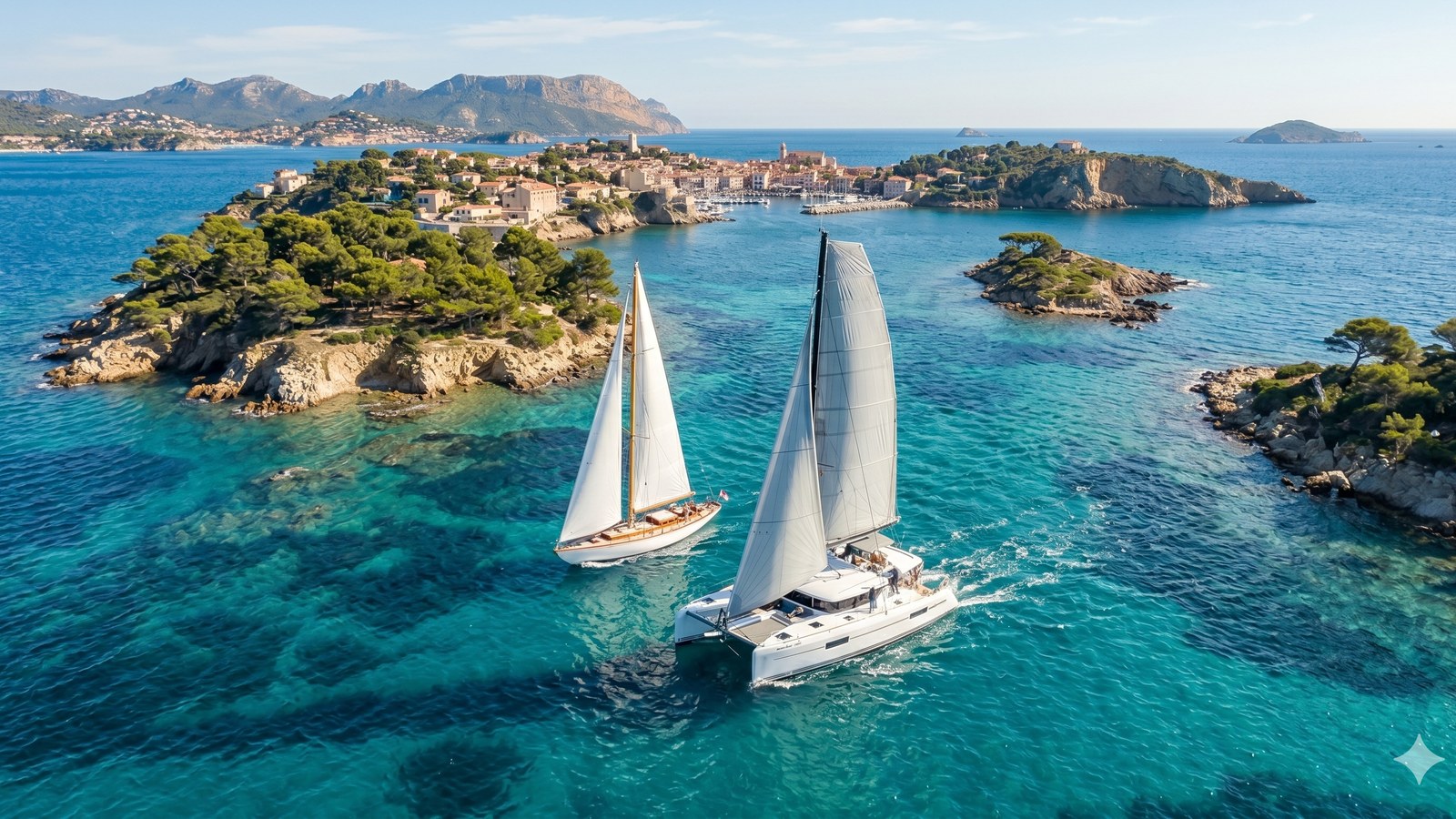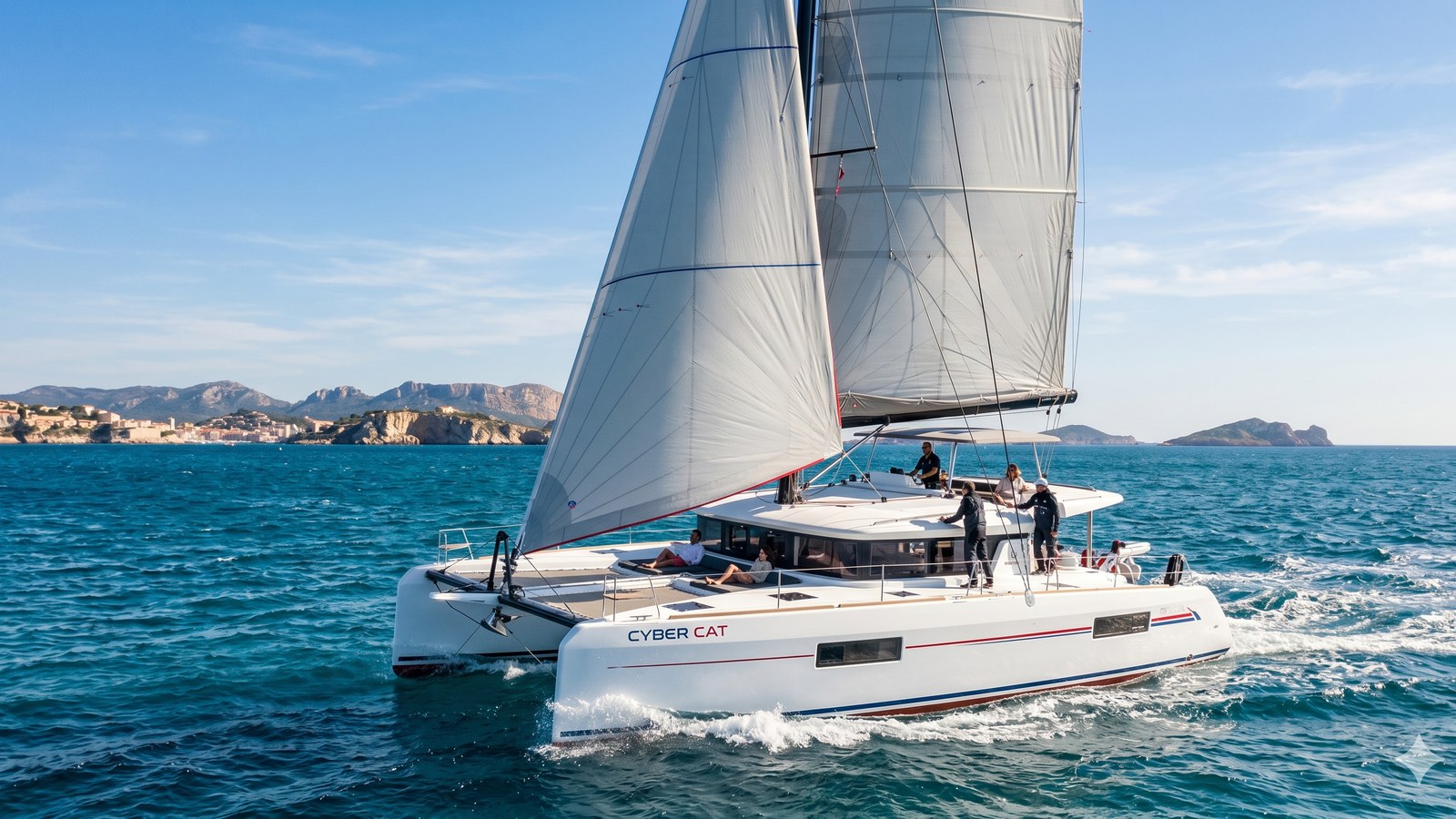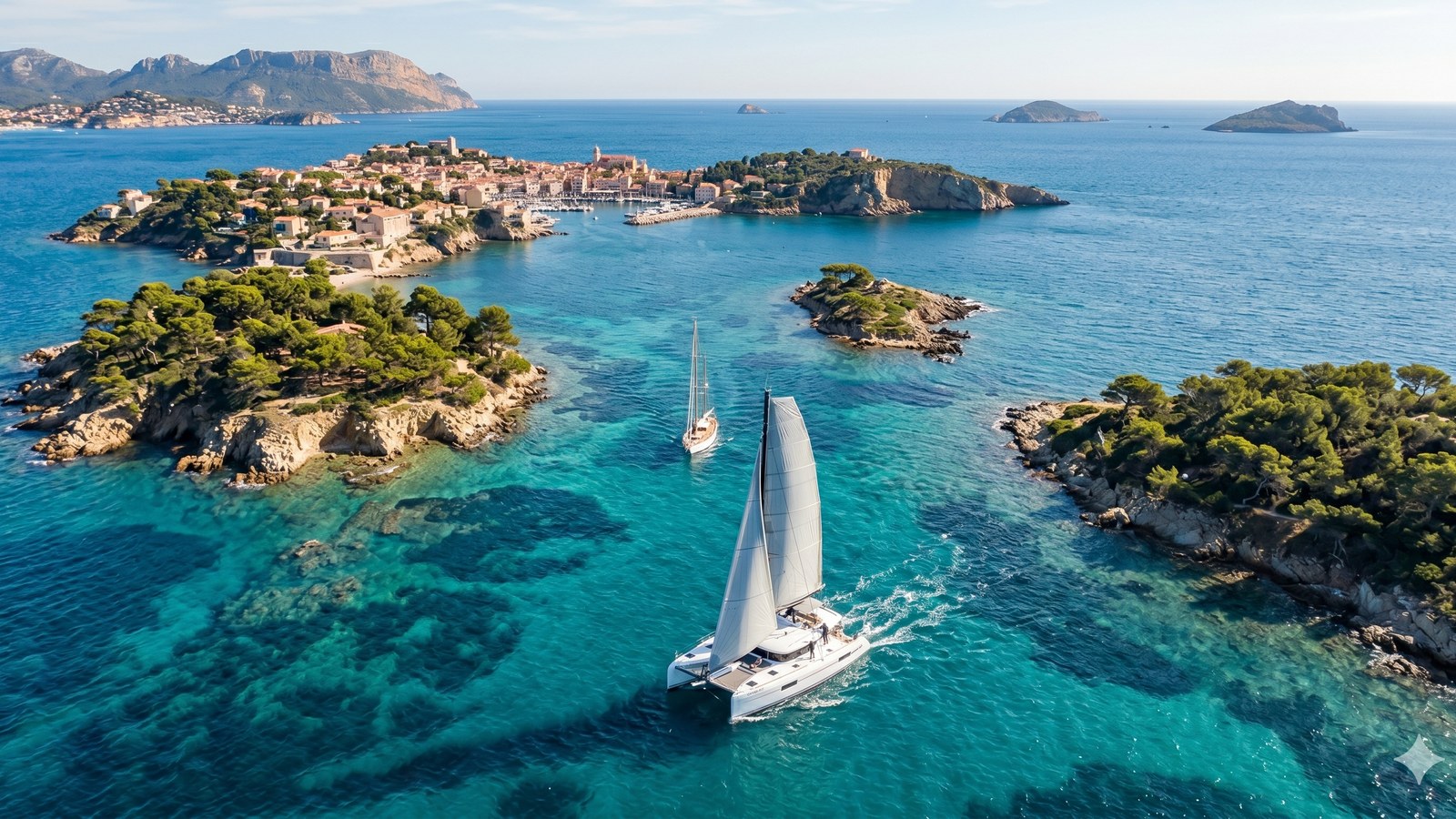
The catamaran revolution has reshaped Asian sailing. From the liveaboard family crossing from Phuket to the Maldives to the commercial bareboat operation out of Ao Chalong, multihulls now account for a substantial proportion of all insured vessels in Southeast Asian waters. But catamaran insurance in Asia is not simply "yacht insurance with a different shape" — multihulls present specific underwriting considerations that every catamaran owner needs to understand.
Why Catamarans Are Rated Differently
Marine underwriters assess catamarans at higher rates than equivalent monohulls for four main reasons.
Beam width and marina collision risk. A modern 45-foot cruising catamaran is typically 8–9 metres wide. Manoeuvring in a crowded marina, approaching a fuel dock, or picking up a mooring in swell creates collision exposure that simply doesn't exist for a 4-metre-wide monohull. Insurers see higher frequency of minor collision claims from multihulls in marina environments.
Twin-hull repair complexity. Any significant structural damage to a catamaran potentially involves both hulls, the connecting beams, and the bridgedeck. A grounding that causes a hairline crack in one hull may require hauling both hulls for inspection and repair. Repair costs for equivalent damage are consistently higher for cats than for monohulls.
Higher replacement values. A 45-foot cruising catamaran may cost USD 350,000–500,000 new — significantly more than a comparable monohull. Higher insured values mean higher absolute premium even at similar percentage rates.
Windage and storm vulnerability. Catamarans present a much larger lateral profile to wind loading than monohulls. In storm conditions, the windage of a modern cat — particularly one with a hard bimini or fixed cockpit enclosure — creates enormous lateral loads on mooring systems. This makes Named Storm claim frequency higher for catamarans.
Named Storm Cover: More Important for Cats
Named Storm cover is arguably more critical for catamarans than for any other vessel type in Asia. The combination of high windage, limited heeling ability (no keel to keep the vessel upright), and wide beam makes an unprotected catamaran at anchor particularly vulnerable in tropical storm conditions.
In the 2022 storm season, several catamarans in the Gulf of Thailand suffered total losses from a relatively moderate tropical storm because they were swinging at anchor on poorly-maintained mooring systems in exposed bays. Their insurance policies excluded Named Storm damage — their owners received nothing. The additional premium cost of a Named Storm endorsement is typically 0.2%–0.5% of hull value per year. Against the risk of a total loss of a USD 400,000 catamaran, the cost is trivial.
Charter Catamarans: The Dominant Platform
Catamarans dominate the charter market across Southeast Asia. The Lagoon 50, Leopard 45, and Fountaine Pajot Elba 45 are ubiquitous in the Phuket bareboat charter market. Maldivian safari boat operations are largely conducted on custom cruising catamarans. Philippine day-trip operators use catamarans extensively.
Commercial charter catamarans require commercial marine insurance — not recreational policies. The distinction is absolute: carrying paying guests on a recreational policy immediately voids the coverage. Commercial charter catamaran policies cover passenger liability (required by Thai law and Maldives Ministry of Tourism regulations), commercial hull cover, Loss of Hire, and crew employer's liability.
The Maldives: A Catamaran Cruising Paradise
The Maldives is perhaps the ideal catamaran destination in Asia. The shallow draft of modern cruising cats provides access to inner-atoll passages and sandbank anchorages inaccessible to deeper monohulls. The Ministry of Tourism mandates third-party liability cover (minimum USD 500,000) as part of the cruising permit. Catamaran underwriting for the Maldives focuses on coral grounding risk and the remote environment requiring comprehensive medical evacuation and salvage cover.
How to Arrange Catamaran Insurance in Asia
Specialist marine insurance advisors access all major catamaran insurance markets — Lloyd's syndicates, Pantaenius, Chubb, Markel — and structure policies for your specific catamaran, sailing plan, and commercial or recreational use. Contact us with your vessel details and sailing plans for a comprehensive comparison.